Cairnshill Integrated Primary School
Forest Schools
We are an Official Forest School!
WHAT IS FOREST SCHOOL?
Forest Schools first emerged in Scandinavia in the 1950’s and have become firmly embedded in the Danish education system. They recognise the importance of children having contact with nature from an early age. In the 1990s it was decided that this concept was suitable for use in Britain. Since then, Forest Schools have spread throughout England, Scotland, Wales and Northern Ireland, getting children outside, exploring and enjoying the natural world around them.
FOREST SCHOOL AT CAIRNSHILL IPS
At Cairnshill, we aim to bring learning to life by taking education beyond the classroom and into nature. Using our school grounds and the local area, we incorporate outdoor experiences into everyday teaching, helping children develop confidence, resilience, and a love for the environment. Activities are often linked to topic work and are tailored to each age group: younger children enjoy imaginative play in mud kitchens and nature crafts, while older pupils learn practical skills such as fire lighting, shelter building, and team challenges. Through learning outdoors, we nurture curiosity, creativity, and a sense of adventure in every child.
THE BENEFITS OF FOREST SCHOOL
The benefits of Forest Schools for children and society are well documented. One study found that the benefits to participants were:
- Increased confidence and independence of the child.
- Development of their language skills by providing a real context for language.
- Ability to take risks and to become more open to new experiences
- The forest school program evolves from the needs of the child and includes the child’s interests.
- Provides the practitioner with an alternative view of the child and further insights into a child’s particular development.
- Beneficial to a child’s all-round development, particularly in the areas of personal, social and emotional, language and communication.
- Underpins the principles laid down in the foundation stage guidelines.
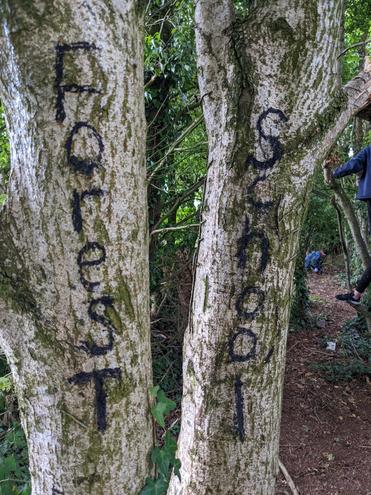
Environmentally friendly charcoal art.
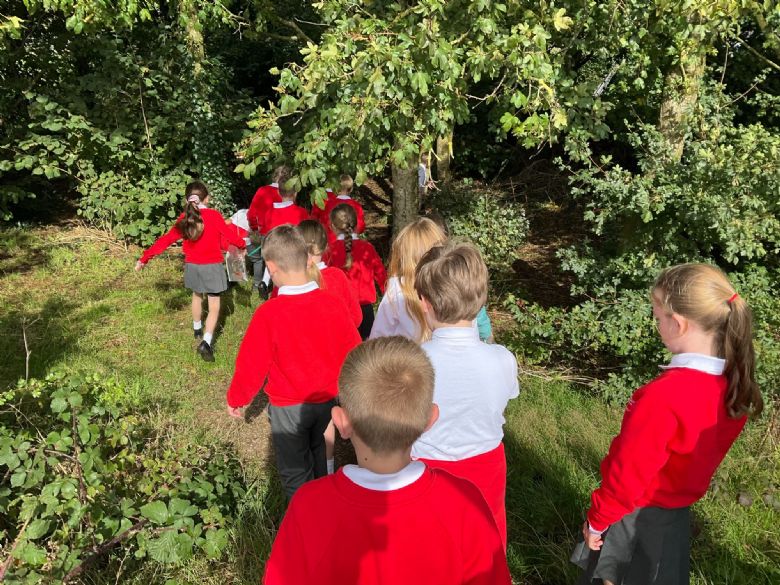
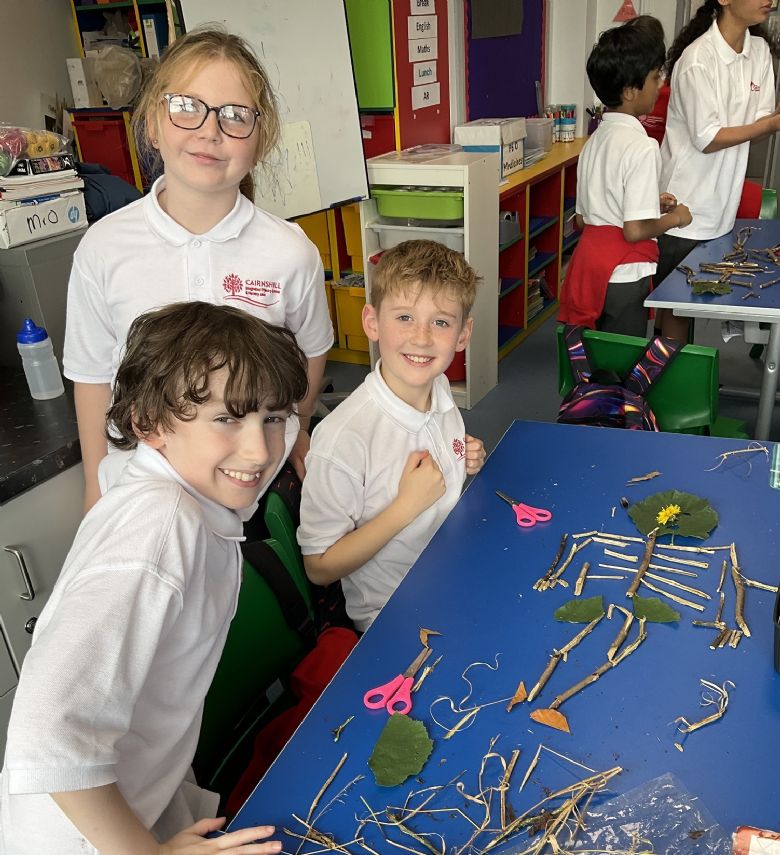
P6 pupils collected materials from a small woodland copse near the school, which they used to create a human skeleton as part of their "Our Bodies" topic.